

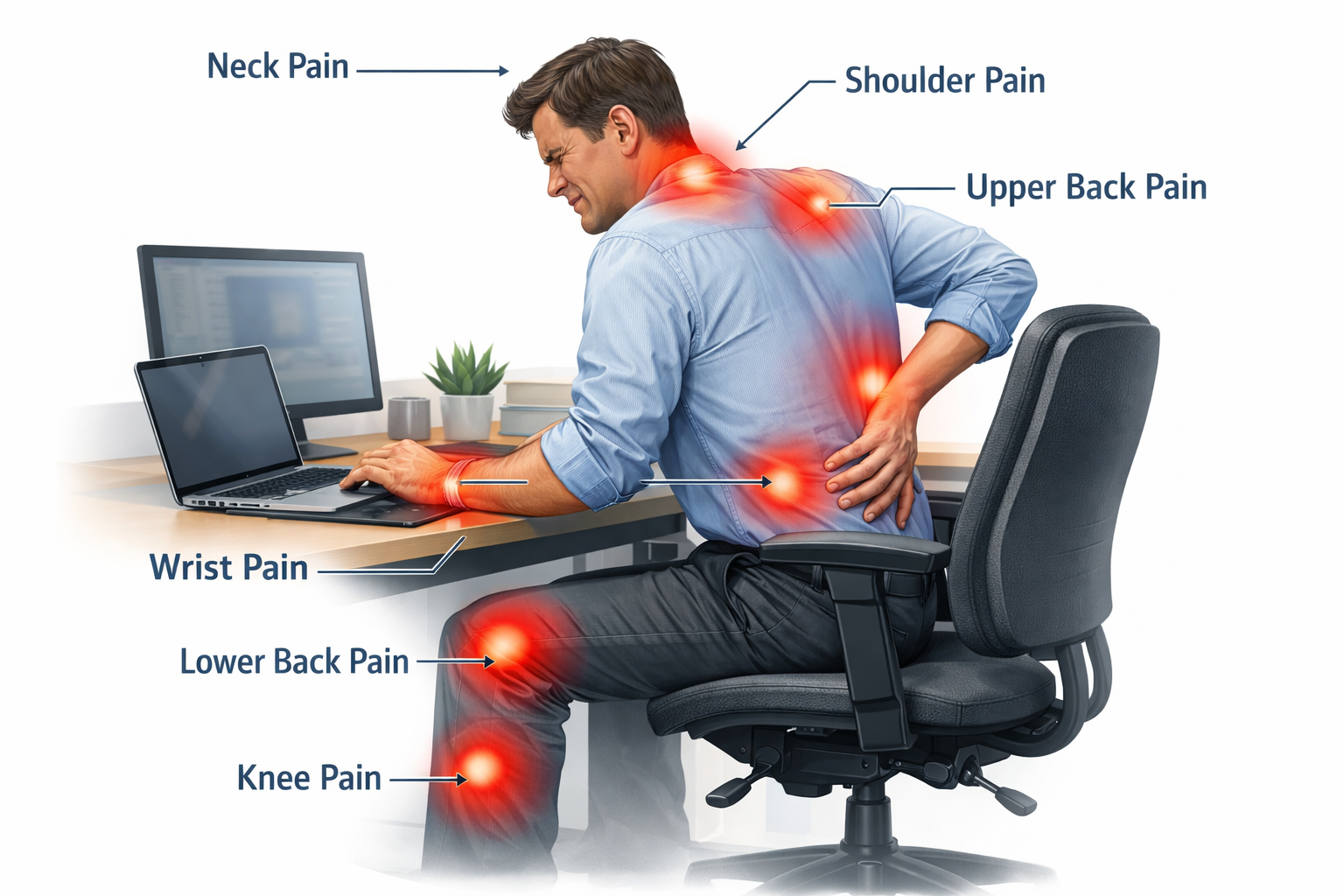
Orthopaedic Problems in Office Workers: Causes, Symptoms & Prevention
The modern corporate landscape has traded physical labor for digital marathons. While sitting at a desk might seem safer than manual labor, it is often the silent catalyst for chronic musculoskeletal issues. For many professionals in Indore and beyond, “the daily grind” has become synonymous with “the daily ache.”

If you are an IT professional or a corporate employee, you likely spend 8 to 10 hours a day tethered to a workstation. This sedentary lifestyle is the primary driver behind orthopaedic problems in office workers, leading to a surge in visits to specialists like Dr. Susheel Soni, a leading orthopaedic doctor in Indore.
In this guide, we will explore why desk jobs are so taxing on the body and how you can reclaim your health without quitting your job.
Why Corporate Employees Develop Orthopaedic Problems
The human body was designed for movement, not for static endurance. When we sit for prolonged periods, our muscles, ligaments, and joints undergo “postural stress.”
The Impact of Physical Inactivity
A sedentary job leads to weakened core muscles. When your core is weak, it cannot support your spine effectively, forcing other structures to overcompensate. This is the root cause of most desk job body pain.
Repetitive Strain Injuries (RSI)
Small, repetitive movements—like clicking a mouse or typing for hours—can lead to inflammation in the tendons. Over time, these minor irritations evolve into significant clinical conditions.
Poor Ergonomic Setup
Most office setups are not customized to the individual’s height or reach. Reaching for a keyboard or looking down at a laptop creates unnatural angles for the joints, leading to long-term wear and tear.
Common Orthopaedic Issues in the Modern Workplace
Understanding the specific nature of your discomfort is the first step toward recovery. Here are the most frequent complaints handled by Dr. Susheel Soni.
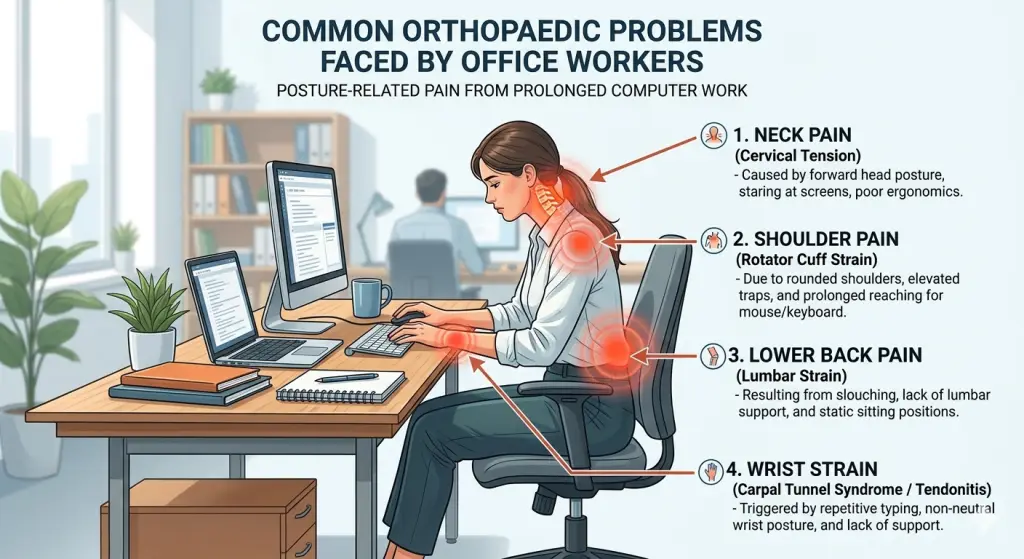
1. Chronic Neck Pain from Computer Work
Often referred to as “Tech Neck,” this condition occurs when you tilt your head forward to look at a screen. This position puts immense pressure on the cervical spine.
2. Lower Back Pain from Sitting Long Hours
Sitting increases the pressure on your spinal discs by nearly 40% compared to standing. Back pain from sitting long hours is the leading cause of workplace absenteeism globally.
3. Knee Pain in Office Workers
You might think your knees are resting while you sit, but prolonged sitting with knees bent at sharp angles can lead to “Patellofemoral Pain Syndrome.” This is especially common if you tuck your feet under your chair.
4. Carpal Tunnel Syndrome and Wrist Strain
The constant flexion of the wrist while typing can compress the median nerve, leading to numbness, tingling, and weakness in the hand.
How Bad Posture Affects Your Spine and Joints
Your spine has a natural S-curve that distributes weight evenly. When you slouch, that curve is distorted, leading to several complications.
Spinal Disc Compression
Slouching causes the soft discs between your vertebrae to compress unevenly. This can eventually lead to herniated or slipped discs, requiring intervention from an arthroscopic surgeon.
Muscle Imbalance and Tightness
When you hunch forward, your chest muscles tighten while your upper back muscles become overstretched and weak. This imbalance makes it even harder to sit up straight, creating a painful cycle.
Reduced Blood Circulation
Static posture restricts blood flow to the spinal tissues. Without fresh oxygenated blood, your muscles fatigue faster and take longer to recover from the workday.
Simple Stretching Exercises for Office Workers
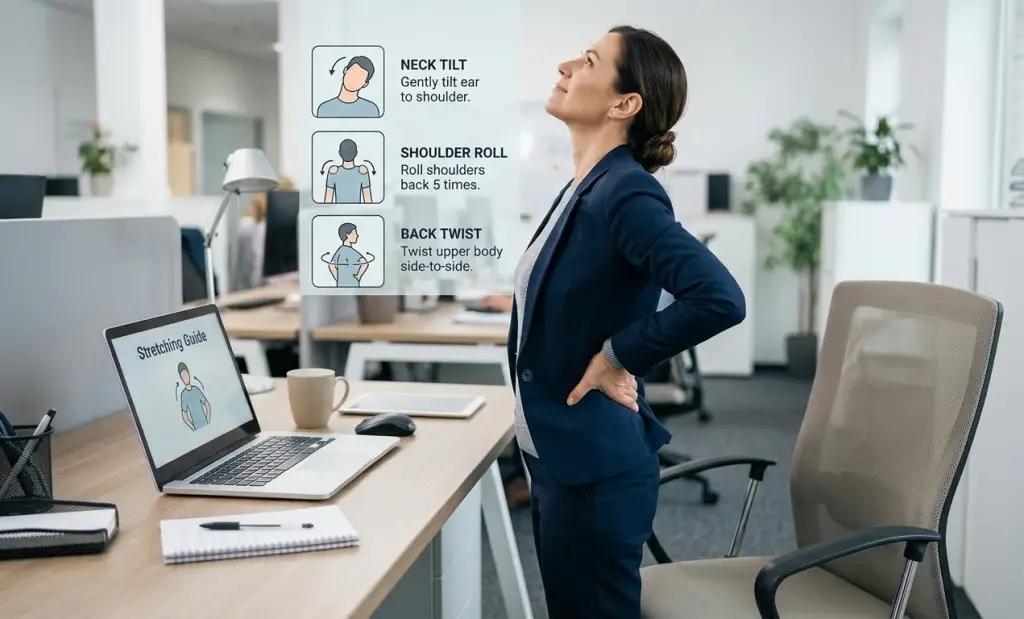
You don’t need a gym to protect your joints. Incorporating these “desk exercises” every 60 minutes can significantly reduce corporate office back pain.
Neck Tilts and Rotations
Gently lower your ear to your shoulder on each side. This releases tension in the trapezius muscles and helps alleviate neck pain from computer work.
Seated Spinal Twists
While sitting, place your right hand on the back of your chair and twist your torso to the right. Hold for 15 seconds and switch sides to maintain spinal flexibility.
The “Brugger’s Relief” Stretch
Sit at the edge of your chair, spread your legs, turn your palms outward, and pull your shoulder blades back. Look slightly upward and take deep breaths for 30 seconds.
Essential Tips to Prevent Pain While Working at a Desk
Prevention is always better than a surgical cure. Follow these ergonomic principles to safeguard your musculoskeletal health.
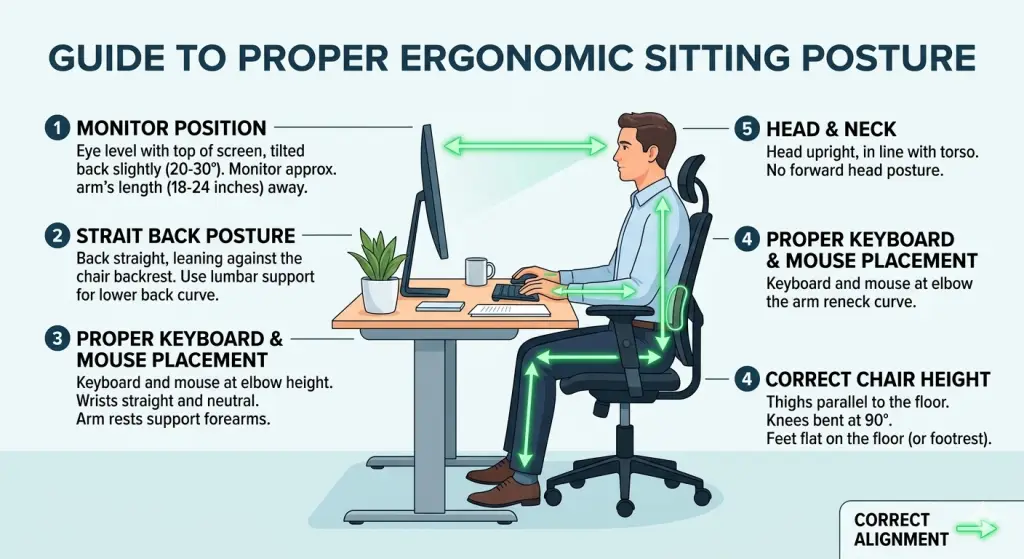
Optimize Your Monitor Height
The top third of your computer screen should be at eye level. This prevents you from tilting your head down, which is the primary cause of neck strain.
Use the 90-90-90 Rule
Ensure your elbows, hips, and knees are all bent at a 90-degree angle. Your feet should rest flat on the floor or a footrest.
Invest in Lumbar Support
If your chair doesn’t have built-in support, use a small pillow or a rolled-up towel to maintain the natural curve of your lower back. This is crucial for preventing back pain from sitting for long hours.
When to Consult an Orthopaedic Doctor
While stretches help, some symptoms require professional medical expertise. Ignoring warning signs can lead to permanent joint or nerve damage.
Persistent Numbness or Tingling
If you feel “pins and needles” in your arms or legs, it may indicate nerve compression that needs immediate attention from an expert like Dr. Susheel Soni.
Pain that Disrupts Sleep
If your sitting job health problems are preventing you from getting a good night’s rest, your body is no longer able to heal itself naturally.
Reduced Range of Motion
If you find it difficult to turn your head while driving or struggle to stand up straight after sitting, it is time to consult an orthopaedic doctor in Indore
Conclusion: Take Control of Your Bone and Joint Health
Managing orthopaedic problems in office workers requires a proactive blend of ergonomic awareness, regular movement, and expert medical guidance. Your desk job shouldn’t be a sentence for chronic pain. By making small adjustments today, you can protect your spine and joints for a lifetime.
If you are struggling with persistent desk job body pain or require a specialized consultation for ligament or meniscus issues, don’t wait for the condition to worsen.
Consult Dr. Susheel Soni, Orthopaedic, Ligament, Meniscus Expert & Arthroscopic Surgeon. Get expert diagnosis and advanced treatment in Indore to return to a pain-free professional life.