

Patient Profile:
Name: Confidential
Age: 50 years
Gender: Male
Location: Indore, Madhya Pradesh
Giant Cell Tumor (GCT) Surgery Patient Medical History:
Patient ko Giant Cell Tumor right femur tha. Patient ko knee pain aur swelling ke sath consult kiya gaya. Pain aur sujan badh rahi thi aur walking aur daily activities jaise uthne, baithne aur baith kar fresh hone me dikkat ho rahi thi. Swelling knee joint ke upar bone ke andar ek foda tha jo noticeable thi aur patient ne bataya ki chalne aur bike chalane me dikkat aati hai.
What is Giant Cell Tumor (GCT)?
Giant Cell Tumor (GCT) ek rare bone tumor hai jo aksar long bones me hota hai jaise femur, tibia aur humerus. Giant Cell Tumor right femur bone me develop hota hai. Yeh tumor usually benign hota hai, lekin yeh locally aggressive bone tumor hai aur joint destruction, bone deformity aur chronic pain jaise samasya ka samna karna pad sakta hai.
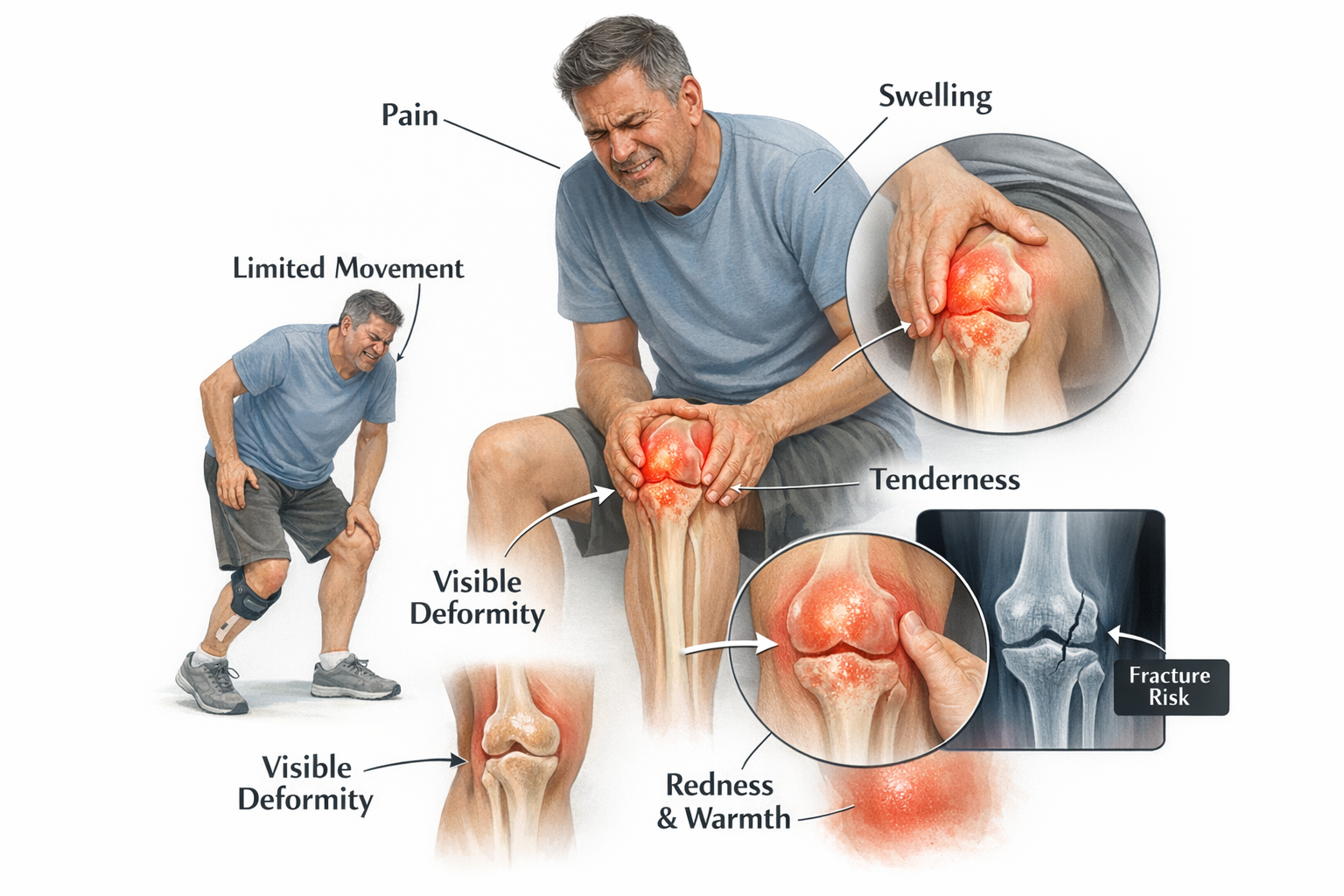
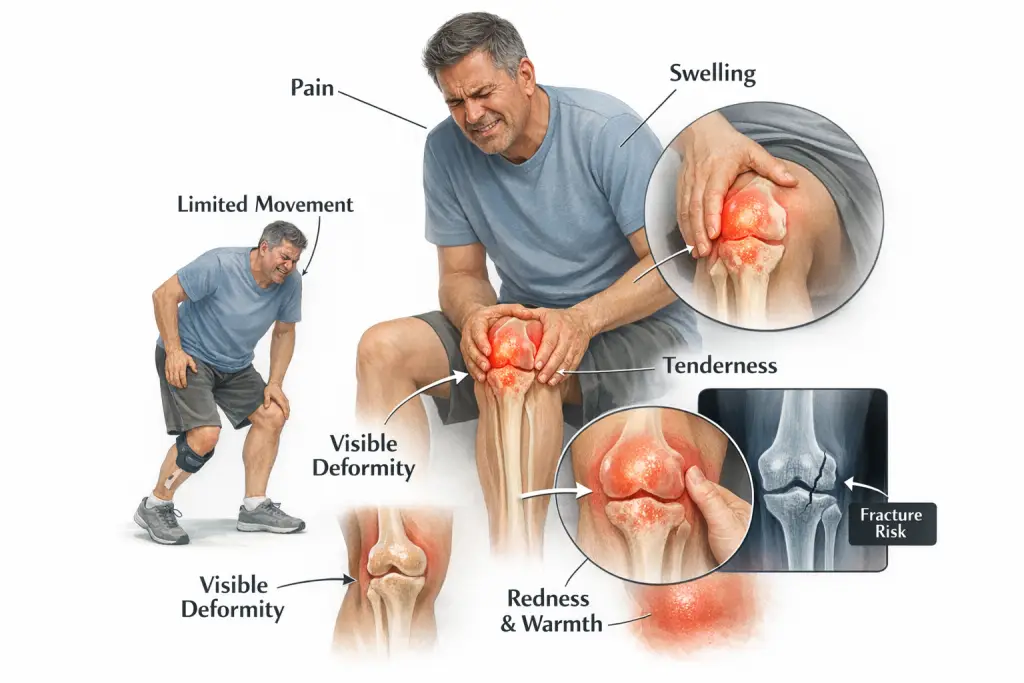
GCT ke Common Symptoms:
Pain (Dard)
Joint me dard sabse common symptom hai.
Shuru me affected area me mild pain hota hai, phir dheere-dheere badhta hai.
Affected area ka pain aksar joint movement ke sath badhta hai.
Swelling (Sujan)
Affected area me dheere-dheere swelling aati hai.
Swelling aksar visible hoti hai aur touch karne par painful hoti hai, jo patient ko aur bhi kamzor banati hai.
Restricted Joint Movement
Agar tumor joint ke paas ho (knee, wrist, ankle, etc.), to movement limited ho sakta hai aur patient ko chalne, uthne aur baithne me kaafi samay ka samna karna padta hai.
Tenderness
Tumor wale area me touch karne par sensitivity aur tenderness hoti hai.
Fractures (Kabhi-kabhi)
Giant Cell Tumor bone ko weak kar deta hai, isliye pathological fracture ho sakta hai aur minor trauma me bhi bone toot sakti hai.
Visible Deformity
Agar tumor kaafi bada ho jaye, to bone shape me deformity dikh sakti hai aur wahan ka area alag hi dikhne lagta hai.
Rare Symptoms
Rare cases me swelling ke sath redness ya warmth bhi ho sakti hai.
General symptoms jaise fever ya weight loss usually nahi hote, kyunki GCT systemic nahi hota.
Pain (Dard)
Risk Factors for Giant Cell Tumor:
Adults, especially 20–50 years age group ke logon me zyada dekha jata hai.
Female aur male dono me hone ki sambhavana hoti hai, lekin male ke mukable female me Giant Cell Tumor hone ke zyada chances rehte hain.
Previous bone injury ya abnormal bone growth se Giant Cell Tumor hone ka risk zyada rehta hai.
Diagnosis of Giant Cell Tumor (Right Femur)
Physical Examination (Sharirik Jaach)
Right femur ya knee ke aas-paas swelling, tenderness aur range of motion check ki jati hai.
Agar tumor kaafi bada ho to bone me softness ya deformity feel ho sakti hai.
X-ray (Plain Radiograph)
Sabse pehla imaging test kiya jata hai.
GCT ke liye X-ray par aksar “lytic lesion” dikhta hai, jisme bone me hole ya erosion affected area ke paas dikhai deta hai.
Zyada cases me yeh bone ke end (epiphysis) me, joint ke paas hota hai.
MRI (Magnetic Resonance Imaging)
Soft tissue aur tumor ke exact size aur spread ka pata lagane ke liye MRI ki jati hai.
MRI se bone aur surrounding tissue ke involvement ka clear pata milta hai, jisse exact location aur affected area ka andaza lagta hai.
MRI se surgery plan karne me bahut madad milti hai aur surgery karna aasaan hota hai.
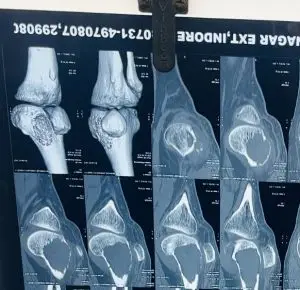
CT Scan (Kabhi-kabhi)
Agar bone ke structure ko aur detail me dekhna ho to CT scan kiya jata hai, jisse bariki se bone ki jankari milti hai.
X-ray se chhupi hui fractures ya subtle lesions ko detect karne ke liye use kiya jata hai.
Biopsy (Tissue Sample)
Confirm diagnosis ke liye small bone tissue sample liya jata hai.
Pathologists check karte hain ki cells, giant cells aur stromal cells GCT ke characteristic hain ya nahi.
Yeh gold standard test hai.
Additional Tests
Overall health aur surgery ke liye routine blood tests (CBC, calcium) kabhi-kabhi kiye jate hain.
Rarely, bone scan ka use kiya jata hai yeh check karne ke liye ki tumor kahin aur spread to nahi hua hai.
Treatment Options for Giant Cell Tumor
GCT ka primary treatment surgery ke dwara kiya jata hai. Agar time par treatment na ho, to tumor locally aggressive hokar bone erosion, joint deformity aur chronic pain cause kar sakta hai.
Curettage with Bone Grafting:
Tumor ko carefully scrape karke affected area me bone graft ya bone cement fill kiya jata hai. Yeh approach localized tumors ke liye safe aur effective hai, jisse patient ko jaldi aaram milta hai.
Wide Resection:
Agar tumor large ho ya joint ko affect kar raha ho, to affected bone ka section remove kiya jata hai aur prosthesis ya bone graft use kiya jata hai. Is treatment me patient ko aaram lagne me thoda time lagta hai.
Denosumab Therapy:
Yeh ek medication hai jo tumor growth ko slow karti hai. Iska use surgery ke pehle ya surgery ke baad bhi kiya ja sakta hai.
Radiation Therapy (Rarely):
Agar tumor surgical removal ke liye feasible nahi ho ya recurrence ka high risk ho, to radiation therapy consider ki jati hai.
Follow-up:
Surgery ke baad patient ko X-ray aur MRI ke through monitor kiya jata hai, taaki ensure ho sake ki tumor completely remove ho chuka hai aur recurrence nahi ho rahi hai.
Case Study: Successful Giant Cell Tumor Right Femur Surgery in Indore by Dr. Susheel Soni
Patient History:
50 saal ke male patient ne persistent knee pain aur swelling ke sath consult kiya. Patient ne bataya ki pichhle teen mahine se dard ho raha tha aur chalne aur baithne me pain hota tha.
Dr. Susheel Soni ne MRI aur X-ray me distal femur me lytic lesion aur bone destruction dekha. Biopsy me Giant Cell Tumor right distal femur confirm hua.
Treatment Plan by Dr. Susheel Soni:
Preoperative Assessment:
Patient ki overall health, blood tests aur cardiac evaluation ki gayi. Patient ko surgery ke liye fit declare kiya gaya.
Surgical Procedure:
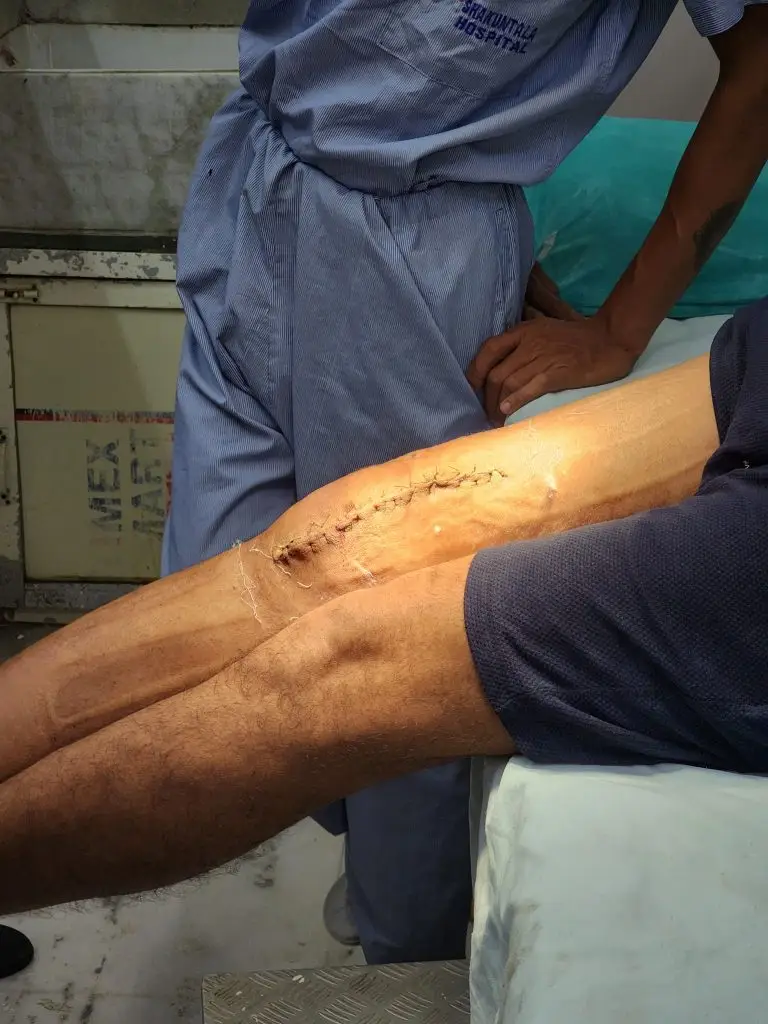
Tumor ko carefully excise kiya gaya.
Affected area me bone graft aur cement se fill kiya gaya.
Knee joint alignment aur stability restore ki gayi.
Minimally invasive techniques use ki gayi taaki recovery fast ho sake.
Postoperative Care:
Pain management ke liye medications di gayi.
Infection prevention ke liye antibiotics diye gaye.
Physiotherapy second day se start ki gayi.
Patient ko proper walking aids aur rehabilitation plan diya gaya.
Outcome:
Tumor completely remove ho gaya.
Knee mobility restore hui.
Patient ne 3 saptah me normal walking aur daily activities shuru kar di, aur chalne, uthne aur baithne me bilkul dard nahi raha.
Follow-up me koi recurrence nahi dekhi gayi.
Conclusion
Giant Cell Tumor (GCT) ek rare but treatable condition hai. Agar timely diagnosis aur proper surgical treatment ho, to patient normal life resume kar sakta hai.
Dr. Susheel Soni ne Indore me multiple successful GCT cases treat kiye hain aur unka high recovery rate patients ke liye reassurance hai.
Contact for Consultation:
Location: Shakuntala Devi Hospital, Goyal Nagar, Indore
Phone: +91 8291 07 6023